
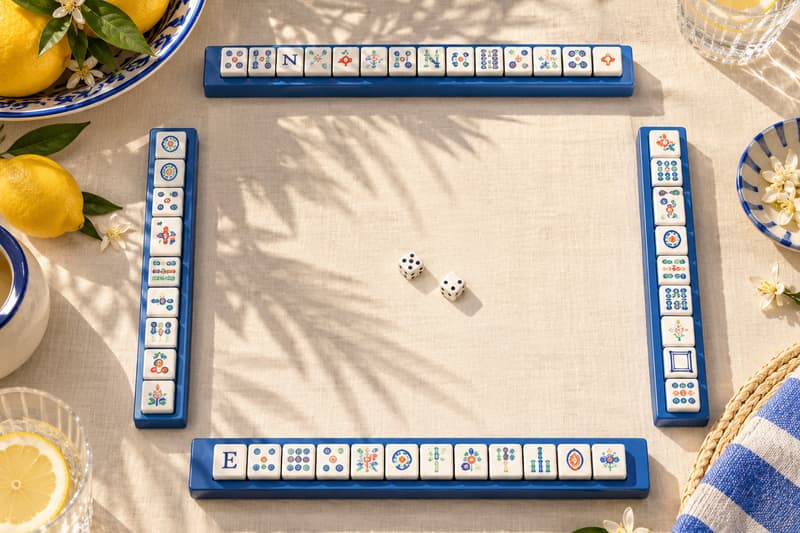
What is American Mahjong?
American Mahjong is a game of skill, strategy, and a little luck, played by four people with a set of tiles. It grew from the Chinese game but developed its own rules in the United States in the early twentieth century. Three things set it apart: jokers, the Charleston (a ritual of passing tiles before each hand), and an annual card of winning hands published by the National Mah Jongg League, founded in 1937.
The goal is simple to describe: be the first player to build a hand of 14 tiles that exactly matches one of the hands on the current card.
What you need
- An American Mahjong set of 152 tiles
- Four racks with pushers
- A current card for each player
- Two dice
For the full checklist, including the accessories that make the game more comfortable, see What You Need to Play American Mahjong.
Getting to know the tiles
| Tiles | Count | Good to know |
|---|---|---|
| Bams (bamboo) | 1–9, four of each (36) | The 1 Bam is traditionally drawn as a bird. |
| Craks (characters) | 1–9, four of each (36) | Marked with a number and a character. |
| Dots (circles) | 1–9, four of each (36) | Count the circles to read the number. |
| Winds | North, East, West, South, four of each (16) | Often used together, as in a “NEWS” hand. |
| Dragons | Red, Green, White, four of each (12) | Red pairs with Craks, Green with Bams, and White (called “Soap”) with Dots. Soap also serves as a zero in year hands such as 2026. |
| Flowers | 8 | All flowers are interchangeable in play. |
| Jokers | 8 | Stand in for any tile in a group of three or more. |
Reading the card
Each year’s card lists dozens of hands, grouped into families such as year hands, consecutive runs, and winds and dragons. Each hand shows exactly which tiles it requires.
- Colors show suits. A hand printed in one color uses a single suit. Two or three colors mean two or three different suits; the colors themselves don’t stand for particular suits.
- X or C. Hands marked X may be exposed: you can call discards to complete groups. Hands marked C are concealed: you must build them from tiles you draw, except for the final tile that completes your Mahjong.
- Values. Each hand is worth a set number of points, printed beside it.
You’ll also hear a few words for groups of identical tiles:
- Pair: two
- Pung: three
- Kong: four
- Quint: five (only possible with jokers)
- Sextet: six
Setting up the game
- Choose a dealer. Each player rolls the dice; the highest roll becomes East, the dealer. The other seats follow to East’s right: South, West, then North. Play always moves to the right.
- Shuffle. Turn all the tiles face down and mix them across the table.
- Build the walls. Each player builds a wall 19 tiles long and two tiles high in front of their rack. Use your pusher to angle the four walls into a square.
- Break the wall and deal. East rolls the dice and breaks their wall that many stacks from the right. Players take tiles in turn, four at a time, until East has 14 tiles and everyone else has 13.
- Arrange your hand. Stand your tiles on your rack, facing you, and start looking for hands on the card that your tiles suit.
The Charleston
Before play begins, everyone passes tiles in a set sequence. It’s the moment to let go of tiles you don’t want and gather ones you do.
- The first Charleston (always played): pass three tiles to the right, three across, then three to the left.
- The second Charleston (optional): if no player chooses to stop it, pass three tiles to the left, three across, then three to the right.
- The courtesy pass (optional): you and the player across from you may exchange up to three tiles, by agreement.
Jokers may never be passed. On the last pass of each Charleston, you may “blind pass” by sending on some or all of the tiles you’ve just received without looking at them.
A good habit for your first games: choose two or three hands your tiles lean toward, and pass away whatever doesn’t fit any of them.
Playing a hand
- East begins by discarding one tile face up in the center of the table and naming it aloud, for example “five dot.”
- Play moves to the right. On your turn, take the next tile from the wall, decide whether it helps you, then discard one tile and name it.
- Calling a discard. If another player discards a tile that completes a group of three or more for you, you may call for it. Take the tile, place the completed group face up on top of your rack (this is an exposure), then discard. Play continues to your right.
- What you can’t call. You can’t call a discard to make a single tile or a pair, unless that tile completes your Mahjong. For concealed (C) hands, only the final tile may be called.
How jokers work
- Jokers can stand in for any tile in a pung, kong, quint, or sextet.
- They can never be used for a single tile or a pair.
- Joker exchange: if an exposure on any player’s rack contains a joker, and you hold the actual tile it represents, you may swap your tile for the joker on your turn.
- A discarded joker can’t be called by anyone.
Declaring Mahjong
When your 14 tiles exactly match a hand on the card, say “Mahjong!” and lay your hand face up so everyone can check it. You can win with a tile you draw yourself or by calling a discard.
- Paying out. The winner is paid the value of the hand. The player whose discard completed the hand pays double; everyone else pays the value shown. If you drew the winning tile yourself, all three players pay double.
- House rules. Many tables add a bonus for hands made without jokers. Agree on scoring before the first hand.
- Wall game. If the wall runs out before anyone declares Mahjong, no one scores and the deal moves on.
After each hand, the role of East passes to the right.
Tips for your first games
- Name every discard clearly. It keeps the game friendly and fair.
- Keep your options open. Early on, aim for two or three possible hands and narrow down as tiles arrive.
- Watch the discards. What other players throw away tells you what they aren’t collecting.
- Know when a hand is dead. If a player’s exposures can no longer match any hand on the card, their hand is declared dead. They stop playing that hand but still pay if someone else wins.
- Play a few hands open. With racks turned face up, everyone can learn together before playing for real.
Ready to play?
Gather three friends, set the table, and start with a few practice hands. For ideas on making the evening special, read How to Host a Mahjong Night.
This guide follows the standard rules of American Mahjong as played from the National Mah Jongg League card. Many groups add their own table rules, so agree on yours before you begin.